 Menu
Menu 

DECARBONIZATION
AT SCHWENK
GROUP
SCHWENK is one of the oldest family-owned building materials producers in Europe, continuing sustainable production of cement in already sixth generation.
With constant innovation and investment, we have achieved excellent results in CO2 emission reduction through alternative fuel and constantly working to extend the usage of alternative cementitious materials. Yet it is not enough for us. Carbon capture is our next big step towards making cement production carbon neutral.
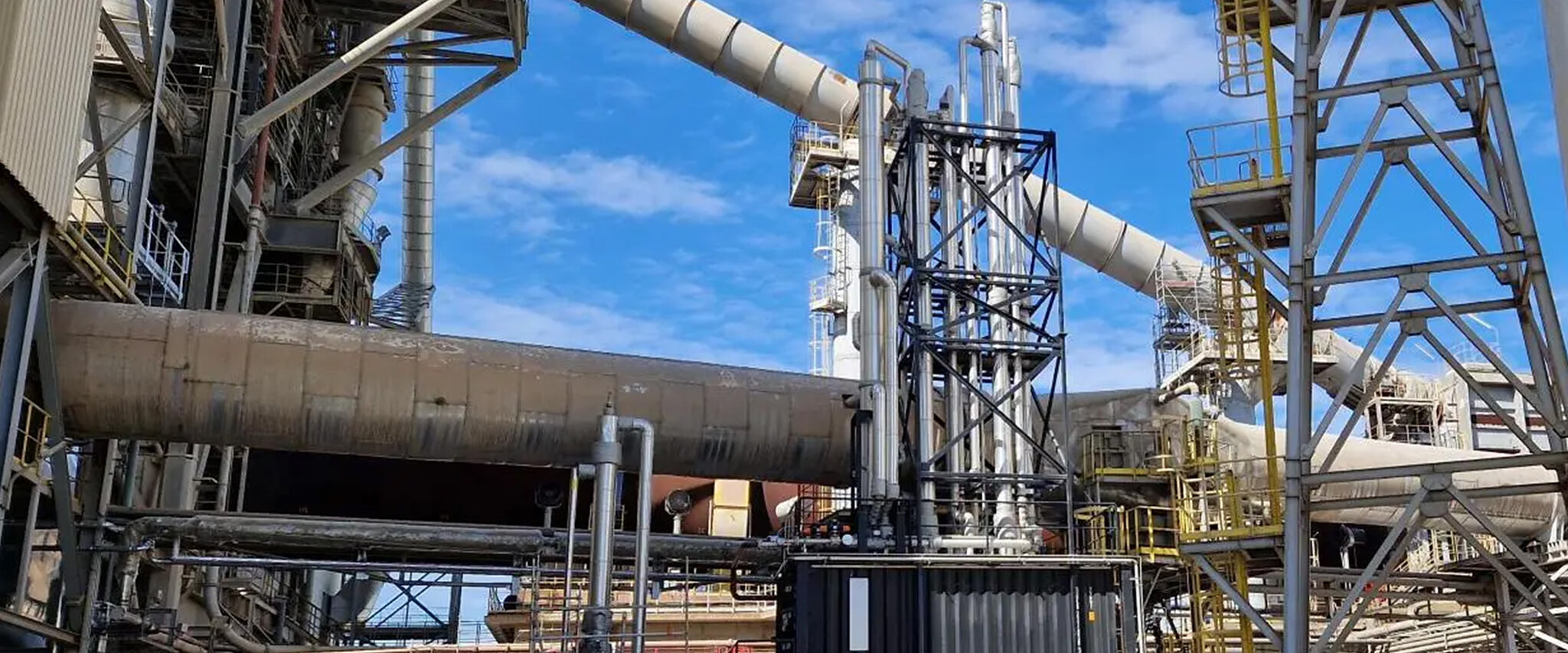
SCHWENK Group is focusing on two technological approaches for CO2 capturing – the oxyfuel process, which requires building a new kiln line, and tail-end technologies. Both technologies are presently tested in two SCHWENK cement plants. Oxyfuel technology is being tested in Mergelstetten, Germany, as part of the catch4climate project in the CI4C consortium. In Latvia, as of 2025, several tail-end carbon capture solutions have been explored within Broceni CC project, including hot potassium carbonate (HPC) and metal-organic framework (MOF) technologies. Currently, pressure swing adsorption (PSA) is under testing, and cryogenic carbon capture (CCC) technology is planned for showcasing in the near future.
Broceni Carbon Capture is set to be the first one in the SCHWENK Group to decarbonize through carbon capture with other plants following short after.
Get to know more about SCHWENK decarbonization roadmap here
It’s all in the mix – we are making many adjustments to achieve emission-free production by 2045.
More climate-friendly clinker production
1) Use of alternative raw materials
SCHWENK replaces more than 14% of natural raw materials with alternative materials. These are combined in such a way that our quality standards are maintained. By using alternative raw materials, we conserve resources, close material cycles and reduce CO₂ emissions.
2) Use of alternative fuels
The use of alternative fuels such as dried sewage sludge or BGS is standard practice at SCHWENK. For years, we have been the leader in alternative fuel rates in the German cement industry, resulting in one of the lowest CO₂ emissions among widely used types of cement.
Our goal: to reduce the CO₂ emissions factor of clinker production by 200 kg per tonne by 2030 compared to 1990 levels.
Cements with less clinker
The targeted reduction of the clinker content in cement reduces the product’s CO₂ emissions. This is achieved through the use of grinding aids that replace conventional components. To make this transformation future-oriented, we are investing extensively in procurement and long-term security and are continuously advancing research into alternative raw materials.
A milestone in this development is our groundbreaking innovation ‘meca-clay’: for the first time, we have succeeded in converting all types of clay into highly reactive cement additives using only electrical energy – a decisive step towards more climate-friendly building materials.
CCU | CCS
Since around two-thirds of emissions in cement production are process-related, there are technical limits to how much they can be avoided. Our goal is therefore to capture the unavoidable CO₂ directly in the manufacturing process – with the help of modern carbon capture technologies.
The captured CO₂ can then either be liquefied and permanently stored underground (CCS – Carbon Capture & Storage) or, in combination with hydrogen, further processed into new products such as synthetic fuels using various methods (CCU – Carbon Capture & Use).
We are pursuing several technological approaches for CO₂ capture in SCHWENK cement plants:
- Oxyfuel technology
- Tail-end technologies
More climate-friendly concretes
The use of clinker-reduced cements has a significant impact on the global warming potential (GWP) of concrete.
Another step towards sustainable construction is the use of recycled aggregates. They enable the production of resource-saving concretes with excellent sustainability properties – and at the same time make an important contribution to conserving natural raw materials.
Sustainable construction methods using concrete
Thanks to comprehensive innovations, sustainable construction methods using concrete can already be successfully implemented today. This involves the use of both advanced manufacturing processes such as 3D printing and product innovations such as carbon concrete and lightweight concrete. These enable a significant reduction in the ecological footprint while meeting the highest structural engineering requirements.
Circular economy and recycling
The circular economy is becoming increasingly important in the construction industry. Since 2023, SCHWENK has been consolidating its circular economy activities in a separate division.
Sustainable logistics
At SCHWENK, reliable, punctual and cost-efficient delivery to our customers is our top priority. Even when customer demand fluctuates significantly, we remain a reliable partner with deliveries that are accurate to the hour.
Our building materials are naturally heavy. In the interests of sustainability, we therefore use inland waterway vessels and railways whenever possible to deliver raw materials and ship building materials.
Sustainable energy
Across all locations and divisions, we at SCHWENK are pursuing an increase in the proportion of green electricity. In addition to concluding various power purchase agreements (PPAs), we are working on a number of projects to reduce the overall electricity consumption of our plants.
Our certified energy management system in accordance with DIN EN ISO 50001 helps us to systematically record, analyse and continuously optimise our energy consumption.
Renaturation and recultivation
Rock extraction projects involve interventions in nature and the landscape that can last for several decades. This makes it all the more important to limit these interventions to what is absolutely necessary. Our approach is based on holistic concepts that both minimise land use and ensure the full utilisation of natural resources. In addition, we make targeted use of alternative raw materials to further reduce the environmental impact.
Even during ongoing mining operations, we create new habitats for pioneer species and rare animal and plant species through our migratory biotope concept. As part of our biodiversity management plans and species conservation projects, we specifically promote endangered species and biotic communities – for example, through measures to reintroduce the grey partridge.
The land is always used in compliance with the law and in close consultation with the relevant licensing authorities and local communities. The aim is to avoid conflicts of use and to implement renaturation in a professional manner that is adapted to the natural environment. We also adhere to a binding guideline that takes into account operations in areas with potential land use conflicts. The definition of such sensitive zones is based on internationally recognised guidelines, such as UNESCO World Heritage Sites and the protected area categories of the International Union for Conservation of Nature (IUCN).
Multiple technological approaches – one goal

To test this process, SCHWENK, together with three other partners from the cement industry, has decided to build an initial research and development plant at its Mergelstetten site. The specially founded company ‘Cement Innovation for Climate’ (CI4C) will drive this forward-looking project forward in the coming years.

However, the large volume flow of the exhaust gas poses a technical challenge. Air consists of 78% nitrogen (N2). To use the carbon capture process, nitrogen and CO₂ must be separated from each other. In terms of plant technology, this can mean high investments and high electricity and heat requirements during operation.
The best-known process in post-combustion technology is amine scrubbing. However, there are other processes, such as hot potassium carbonate (HPC) technology.
SCHWENK will be testing HPC technology with the CapsolGo® plant from the fourth quarter of 2024 onwards, alternating between the two locations in Brocēni, Latvia, and Akmene, Lithuania, as well as using Svante technology at the Brocēni site.